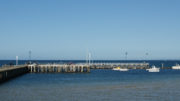
The King George Whiting is regarded by many as the finest eating fish found in our region and may grow to a maximum length of nearly 70cm and a weight of up to 4kg, but the usual catch is much smaller. They are endemic to Australia and found from around Sydney, along the southern coastline of Australia to around Perth. They actually got their name from the place they were named, King George Sound in Western Australia back in 1829. Whiting have been for decades one of the most important fish to the fishing industry, being good keepers and very tasty.
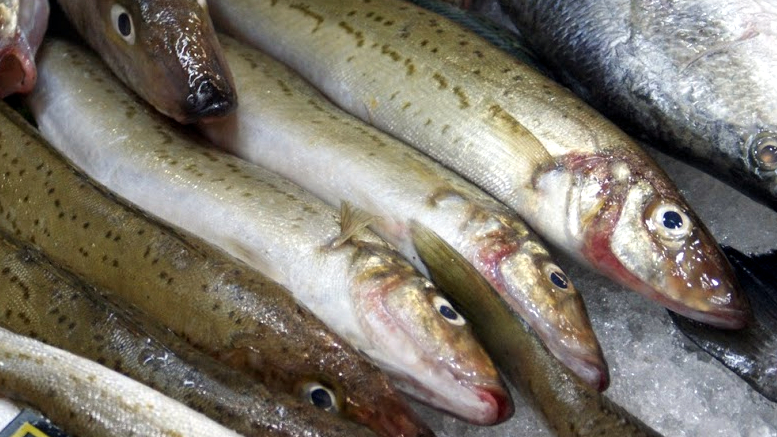
Being a member of the smelt family the King George Whiting are an attractive fish as far as fish go, with a slender, rounded body and a tapering head. Their body is light to dark brown above changing to silver below, with many small dark spots on the sides, often in rows. The dorsal fin consists of two almost completely separated sections, the first of which contains rather weak spines. The second section is longer and contains soft rays. The mouth is small and has a single row of teeth. The caudal or tail fin usually has a yellowish tinge.
Juvenile King George Whiting are most often found in our Corio and Port Phillip bays, inlets and other shallow, sheltered coastal waters – usually in close proximity to sea grass beds, for the first few years of their life feeding mainly small crustaceans, in particular bass yabbies and they really enjoy marine worms. Larger fish feed almost exclusively on marine worms and crustaceans in deeper waters, but will also eat soft-shelled or shell-less molluscs in shallower vegetated areas, they are found more in the open sea, but are commonly caught within the bays.
Catches are highest during late autumn and early winter, but good catches can be taken throughout the year, they put up a good fight for anglers, and are usually caught with worms, pilchards or even shellfish and squid. They can be caught from a boat and are also caught from the many piers and jetties around the region. Surf fishing is also very popular for whiting fishermen and many large fish are caught.
At the time of writing, In Victoria a minimum legal total length of 27cm and a bag limit of 20 fish per person per day applies to King George Whiting. The bag limit was introduced recently partly to assist in the conservation of the whiting population.
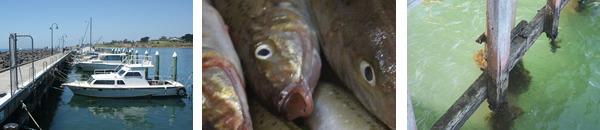
Intown’s Sicilian King George Whiting Barbecued.
This is one of our favourite whiting recipes, the BBQ really brings out the flavours, it is so juicy and serves about 4 people.
You will need, 6 whiting fillets, 1/2 diced red onion, 1 stem of celery diced, 1 tablespoon of honey, 1/2 bunch of dill, 6 spring onions, 1/3 cup of raisins, Olive Oil, Cracked Pepper, Sea Salt and some Olive Oil and a little red wine vinegar.
Simply heat the oil, gently cook the fish skin side down for one minute, then turn. Remove fish, add onions and sea salt, ad celery, followed by currants, add spring onions, honey, dill and vinegar and pepper cook to a thick juicy sauce. Spoon on the fish and serve.